Garden Maintenance Docklands: Recycling and Sustainability
 At Garden Maintenance Docklands we put sustainability at the heart of every job. Our eco-friendly waste disposal area and sustainable rubbish gardening area are designed to reduce landfill, support local circular economy initiatives and deliver measurable environmental benefits across the Docklands and surrounding boroughs. We combine responsible waste sorting, low-carbon transport and community partnerships to make garden maintenance in Docklands genuinely greener.
We operate with a clear recycling percentage target: a baseline aim to divert 70% of garden and green waste from landfill within the next two years, and a rolling target to reach 85% through improved on-site separation and reuse. That goal covers compostable materials, recyclable plastics and metals from garden fixtures, and repurposed soil and timber where safe and feasible.
 Our approach complements the boroughs' approach to waste separation. Docklands sits across several local authorities, so we adapt to Tower Hamlets, Newham and neighbouring boroughs' rules—separating food waste, garden waste and dry recycling into dedicated caddies and sacks. This alignment ensures that our sustainable garden maintenance Docklands services are compatible with council-led collections and local transfer processes.
Eco-friendly waste disposal area and on-site practices
On site we run a designated eco-friendly waste disposal area to sort materials immediately. Staff use clear labelling and colour-coded containers for green waste, compostables, mixed recyclables and hazardous small items such as batteries from outdoor equipment. All operatives are trained in best-practice separation so the right materials reach the right stream and contamination is minimised.
We process many types of recycling activity relevant to Docklands gardens: leaf mulching for compost, chipping branches into biomass for local energy partners, salvaging bricks and paving for reuse, and segregating plastics and glass for council recycling streams. Garden maintenance in Docklands often yields large volumes of organic waste that we prioritise for composting and soil regeneration projects.
We maintain a small, controlled composting zone for certified on-site composting and temporary storage before transfer to authorised facilities, and we use odour- and pest-management techniques so operations remain neighbourhood-friendly and compliant with borough standards.
Local transfer stations and responsible transfer
When materials leave site they are taken to approved local transfer stations and recycling centres. We regularly use Beckton Household Waste Recycling Centre and nearby borough transfer facilities for sorted loads, ensuring traceable hand-offs and minimal double-handling. These transfer hubs help route materials to appropriate processors—composting sites, wood recyclers or municipal recycling lines.
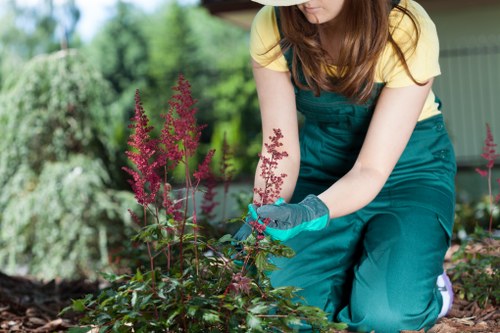 Route planning and consolidation are core to our low-impact logistics: we group collections so fewer journeys are needed, and we prioritise drop offs at local transfer stations that accept garden and green waste streams to reduce cross-town transfers and associated emissions.
To maintain transparency we log weight and destination for major loads, giving project managers the data to measure progress toward our recycling percentage target and to identify further reductions in residual waste.
Partnerships with charities and community groups amplify the sustainability of our Docklands garden services. We work with organisations such as Groundwork London and local community allotments to donate usable topsoil, untreated timber and potted plants for community greening projects. Through these partnerships surplus materials are repurposed for social value rather than becoming waste.
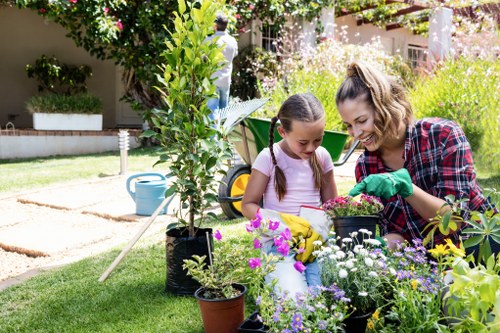 We also coordinate periodic plant and material donations to community gardens and urban agriculture initiatives, prioritising items that can help local food-growing schemes or green infrastructure projects. These collaborations build resilience, lower disposal needs and provide clear social benefits in the Docklands area.
 Our fleet consists of low-carbon vans and electric vehicles where possible: a mix of fully electric light vans and low-emission hybrids for heavier loads. All vehicles are maintained to reduce idling and maximise fuel efficiency, and drivers follow optimized routing to lower total mileage. The result is a smaller operational carbon footprint for every garden clearance and maintenance visit.
We use data-driven reviews to continuously improve: monthly audits compare recycled tonnage against the recycling percentage target, identify contamination hotspots and refine sorting practices. The audits inform staff training, adjustments to our eco-friendly waste disposal area and enhancements to how Docklands garden maintenance is delivered sustainably.
Key practical elements of our low-impact model include:
- On-site segregation to prevent contamination and increase diversion rates
- Composting and mulching to return nutrients to soil and reduce reliance on municipal disposal
- Direct donations to charities and community projects to extend material life cycles
By combining precise on-site separation with trusted local transfer stations, charity partnerships and a low-carbon vehicle fleet, Garden Maintenance Docklands delivers a holistic, accountable model for eco-friendly waste disposal and sustainable rubbish gardening areas—making every green space we care for part of a greener Docklands future.